
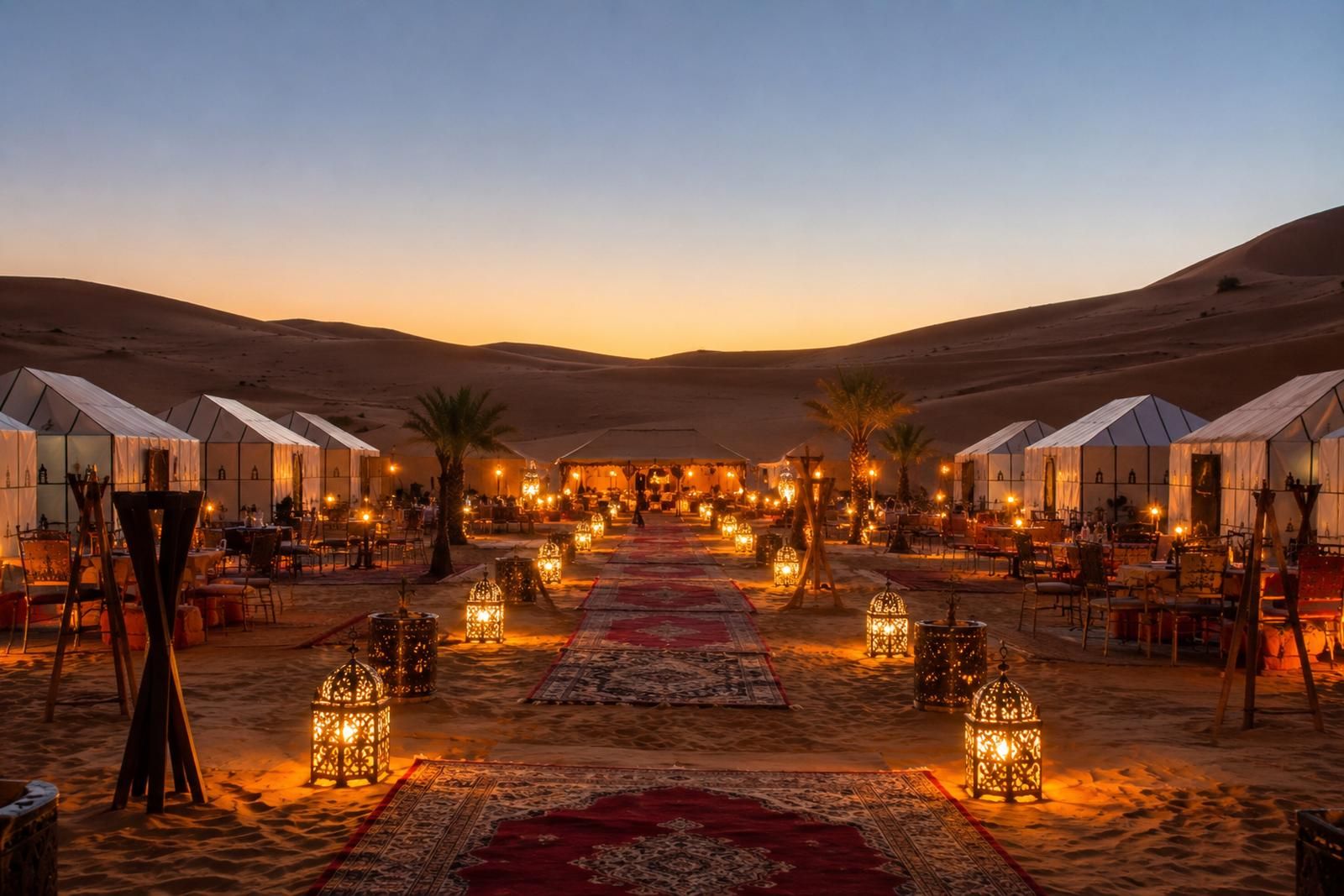
· 7 min read
When Is the Best Time to Visit the Moroccan Sahara?
The short answer is October and April. The longer answer depends on whether you mind heat more than you mind cold, and whether you are willing to trade comfort for an empty desert.
The two windows we recommend
Mid-March to mid-May and late September to mid-November. In both, daytime highs at Merzouga sit somewhere between 22°C and 30°C, nights are cool but not painful, and the light is long and low for most of the day.
April and October are the two best individual months. April adds wildflowers in the Dades and the rose harvest in the Valley of Roses; October adds date harvest in the Ziz and Draa palm groves and the clearest skies of the year.
They are also the busiest months, which in practice means the camps fill and the good ones sell out four to six weeks ahead. Book earlier than you think you need to.
Summer: June to August
Merzouga regularly passes 45°C in July and August, and 48°C is not unusual. This does not make a desert tour impossible — people live there year-round — but it changes how the trip has to be run.
We start at dawn, do the driving in the morning, stop through the middle of the day, and move the camel trek as late as the light allows. Camps run fans and many now have pools at the auberge where you shower before riding out. Nights are the compensation: around 25°C, which is the one time of year sleeping outside the tent on a blanket is the obvious choice.
Book summer only if you are heat-tolerant or travelling with school holidays that leave you no option. With small children we would honestly steer you elsewhere in the calendar.
Winter: December to February
Daytime is close to perfect — 18–22°C, dry, sharp light, and the dunes to yourself. The problem is after dark. Desert nights in January drop to 0–5°C, and the wind makes it feel colder.
Camps provide heavy camel-hair blankets and most now offer heaters in the luxury tents, but you must bring a proper insulating layer, a hat and socks to sleep in. Guests who arrive with a fleece and optimism have a miserable night; guests who pack for a cold campsite have a wonderful one.
The Atlas passes matter too. Tizi n'Tichka on the Marrakech route and the Middle Atlas roads out of Fes both get snow, and can close for a few hours after a storm. They are cleared quickly, but build a little slack into a winter itinerary.
Sandstorm season, and what it actually means
The chergui — the hot easterly wind — is most common between late February and May. A serious sandstorm is rare and usually lasts hours rather than days; what is common in spring is a hazy, gritty afternoon where the horizon disappears and photographs come out flat.
It does not normally stop a tour. It does mean a scarf is not a souvenir but equipment, and it is why we suggest a cheap lens cloth and a plastic bag for camera gear in spring. If a genuine storm is forecast on the night of your camp, camps move guests to the auberge at the edge of the dunes; nobody is left in a tent in a gale.
Ramadan and the Moroccan calendar
Ramadan moves roughly eleven days earlier each year — in 2026 it falls in February and March, in 2027 in January and February.
Travelling during Ramadan is entirely possible and can be memorable: the desert is quiet, and the breaking of the fast at sunset in a small town is something you will not otherwise see. But daytime restaurants in smaller places close, your driver-guide is likely to be fasting, and the roads around sunset get noticeably faster as everyone hurries home. We plan around all of it, and we tell drivers to stop for iftar rather than push on.
The other date to know is Eid al-Adha, when much of the country shuts for two or three days and prices for everything rise. It is not a reason to avoid Morocco, but it is a reason to book well ahead.
Month by month, at a glance
January — 19°C day, 3°C night. Clear, empty, genuinely cold after dark.
February — 21°C / 5°C. Same, with the first chergui winds late in the month.
March — 25°C / 9°C. Excellent, and increasingly busy.
April — 29°C / 13°C. Our joint favourite. Roses in bloom, some haze.
May — 34°C / 18°C. Still good, hot by the end.
June — 39°C / 22°C. Hot. Early starts essential.
July — 43°C / 26°C. Very hot. For the heat-tolerant only.
August — 42°C / 26°C. As July, plus European holiday crowds.
September — 37°C / 22°C. Cooling fast; the second half is lovely.
October — 30°C / 16°C. Our other favourite. Book early.
November — 24°C / 10°C. Quiet, clear, underrated.
December — 20°C / 5°C. Cold nights, beautiful days, Christmas prices.
Common questions
What is the single best month for the Moroccan Sahara?
October, narrowly ahead of April. Daytime around 30°C, nights around 16°C, the clearest skies of the year and the date harvest in the palm groves. April is its equal on weather and adds the rose harvest, but carries more spring haze.
Is it too hot to visit Merzouga in summer?
Not impossible, but demanding — 43–48°C is normal in July and August. Tours run with dawn starts, a long midday rest and a late camel trek. Nights are warm and pleasant. If you have a choice of dates, choose almost any other month.
How cold does the Sahara get at night in winter?
Between 0°C and 5°C at Merzouga in January, and it feels colder in the wind. Camps supply thick blankets, but bring a real insulating jacket, a hat and socks to sleep in.
Will a sandstorm ruin our trip?
Very unlikely. Serious storms are rare and short; hazy, gritty afternoons are common in spring. Camps relocate guests to the auberge at the dune edge if conditions are genuinely bad, so nobody spends a storm in a tent.
Should we avoid Ramadan?
No, but plan for it. Daytime food is limited in smaller towns and your guide may be fasting. In exchange the desert is quiet and sunset in a small town is extraordinary. We build the days around it.
Tours this applies to
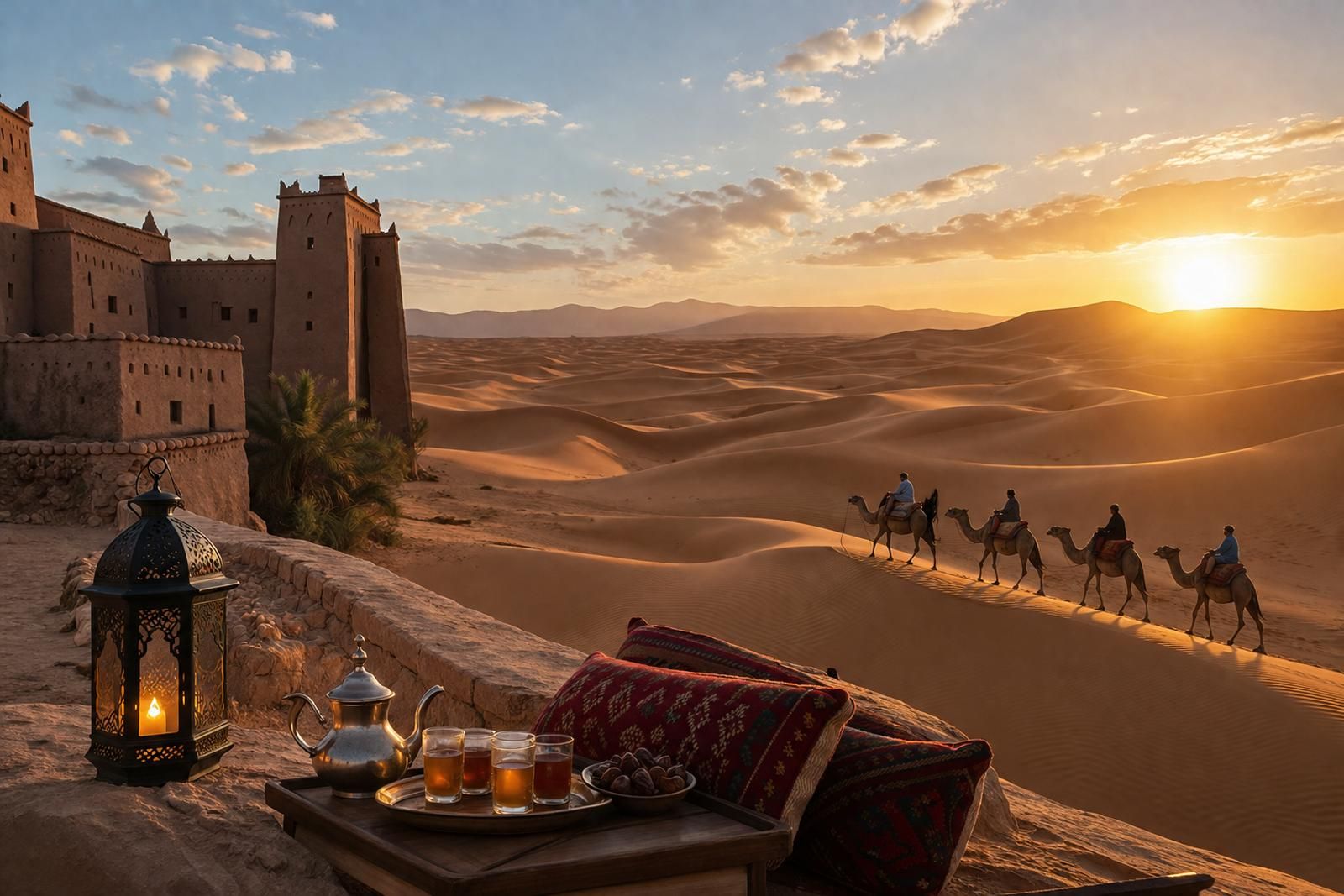
Marrakech
3 Days From Marrakech to Merzouga Desert
Cross the Atlas, sleep in a Sahara camp at Erg Chebbi, ride camels at sunrise.
Price on request Tell us your dates and party size for a quote
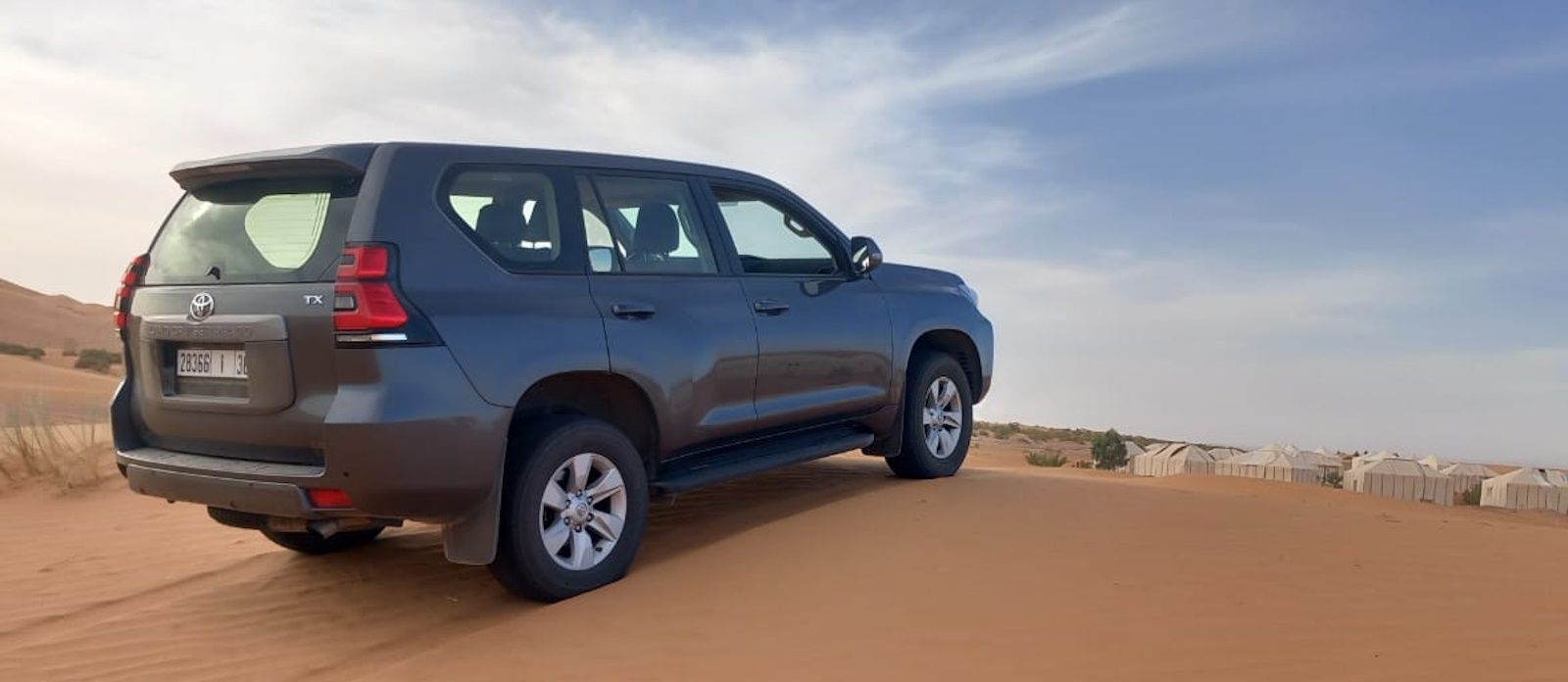
Marrakech
4 Days From Marrakech to Merzouga Desert
The 3-day route with the driving unpacked: more time at the kasbahs, gorges and dunes, and a gentler road home.
Price on request Tell us your dates and party size for a quote
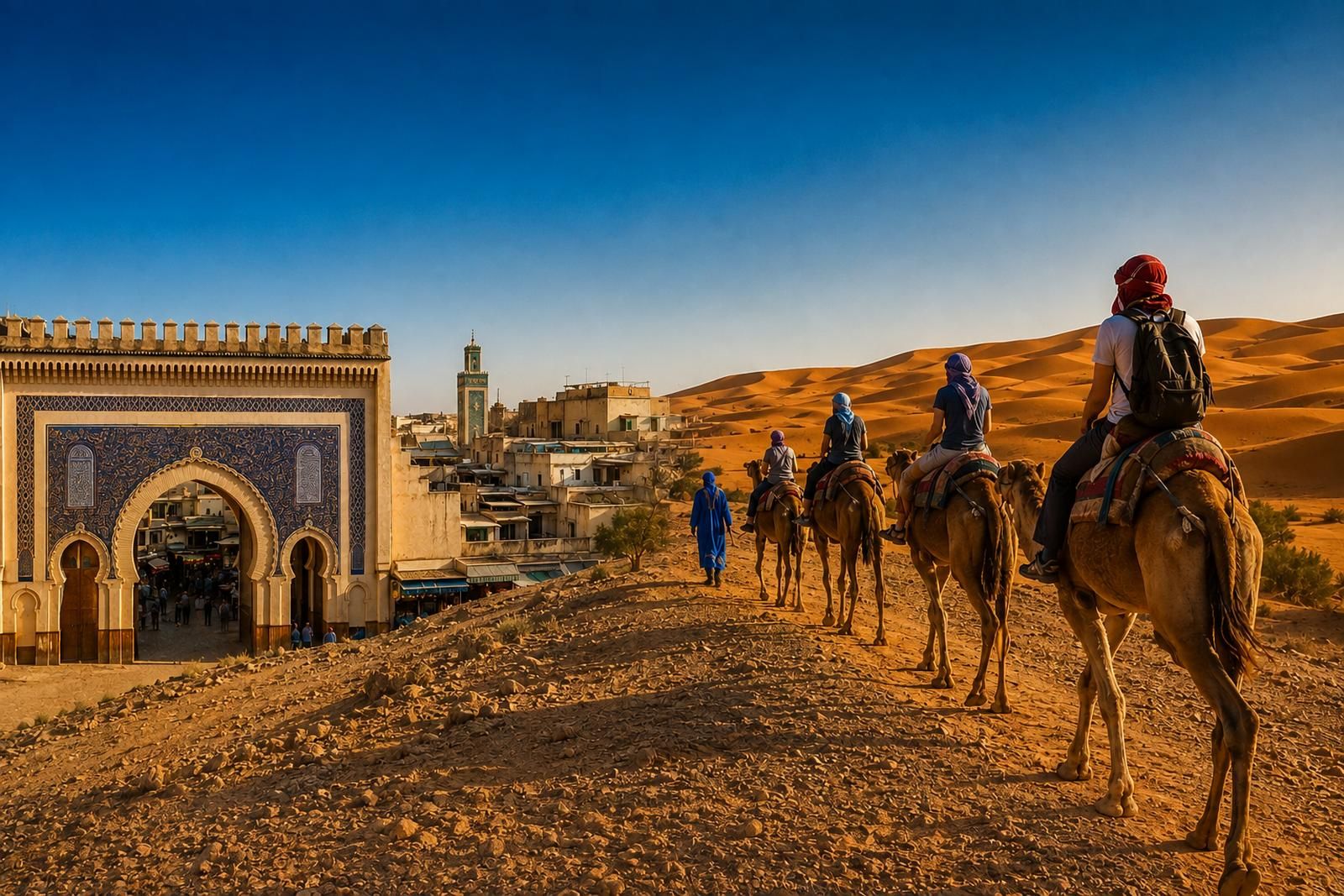
Fes
3 Days From Fes to Merzouga Desert
From Fes across the Middle Atlas and cedar forests to the dunes of Merzouga, and back.
Price on request Tell us your dates and party size for a quote
Questions this did not answer?
Send them over. We reply to everything, and we are not going to push you toward the expensive option.