
· 7 min read
What to Expect From a Night in a Sahara Desert Camp
Somewhere between the marketing photographs and the one-star reviews is what actually happens. Here it is, from the moment you leave the vehicle.
Arriving: the camel trek in
You reach the auberge at the edge of the dunes in the late afternoon, usually between four and six depending on the season. Your luggage stays there, locked. You take a small bag.
The camels — dromedaries, properly — are already kneeling in a line. Getting on is the awkward part: you sit, hold the pommel, and the animal stands back legs first, which pitches you forward hard. Lean back. After that it is a slow, rolling walk, and the guide leads on foot the whole way.
It takes about an hour to reach camp. Sixty minutes on a camel is enough for most people; if you have back trouble or you simply do not enjoy it, say so and you can be driven in by 4x4 instead. Nobody minds, and it costs nothing extra.
About twenty minutes before camp, most guides stop at a high dune for sunset. This is the part people photograph.
The standard camp
What our prices include unless you ask otherwise.
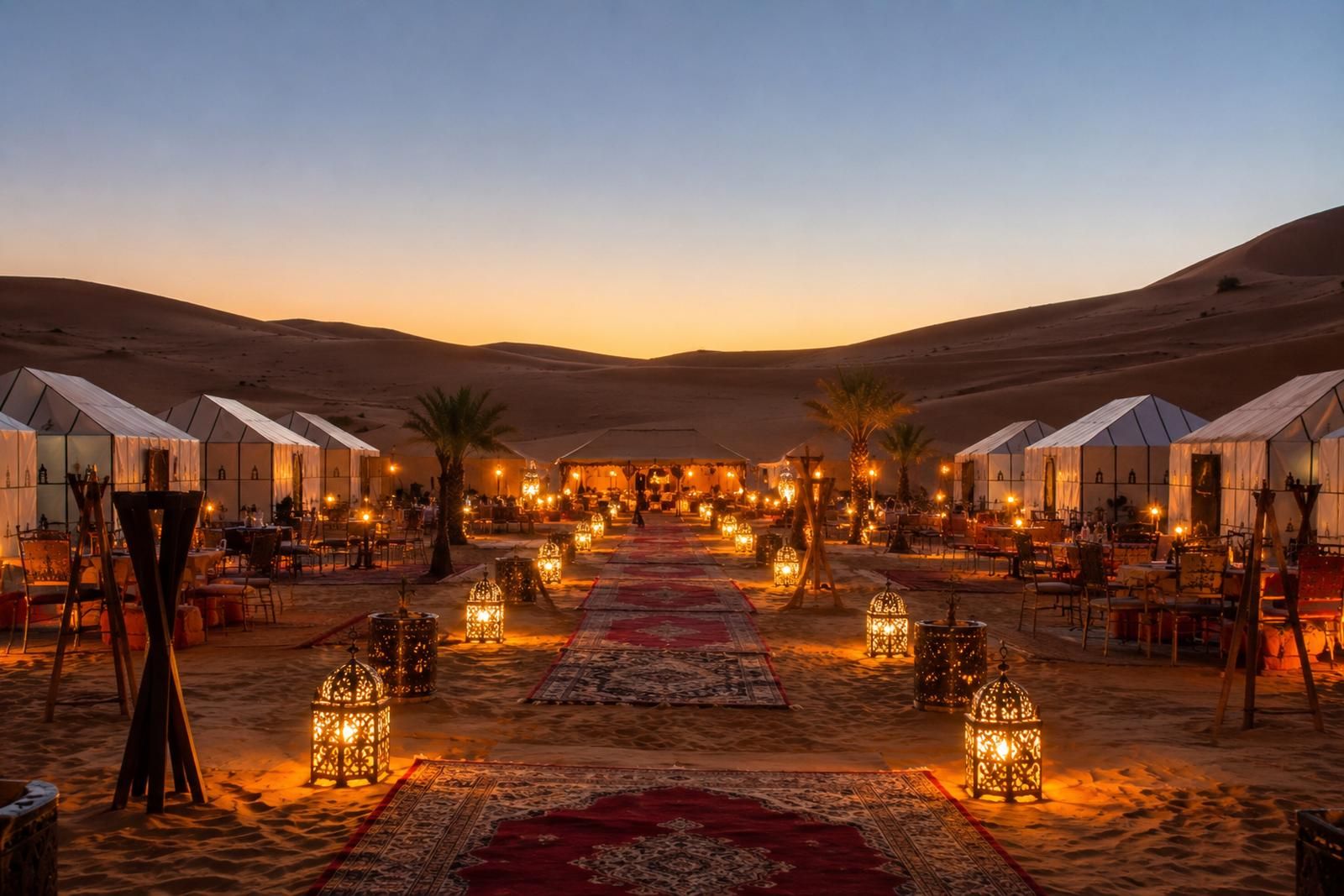
The tent: a private canvas-and-carpet tent for your party, with proper beds — frames, mattresses, sheets, pillows — and a stack of heavy camel-hair blankets. Rugs on the floor, a lantern, and a door that zips or ties.
The bathrooms: a shared block near the camp, with flushing toilets and cold or lukewarm running water. Not en-suite. You shower properly the next morning at the auberge.
Power: solar, and limited. Lanterns in the tents, a shared charging point at the dining tent, no sockets by your bed.
Food: dinner and breakfast included, cooked on site. Harira soup, a tagine, bread, fruit, mint tea. Breakfast is bread, jam, eggs, coffee.
It is comfortable and clean rather than luxurious. If you have camped in your life, it is considerably nicer than that.
The luxury camp
Available at a supplement — ask when you book and we will quote a specific camp rather than a category.
The differences that matter: en-suite bathrooms with hot showers inside your tent, larger tents with real furniture, better bedding, sometimes heating in winter and air conditioning in summer, a more elaborate dinner, and fewer tents in the camp overall.
The differences that do not matter as much as the photographs suggest: the view, the silence, the stars and the sunrise are identical. You are paying for the bathroom and the bed, not for the desert.
Our honest advice: in December to February, the heating is worth the money. In spring and autumn, most guests are perfectly happy in a standard camp and would rather put the difference into a second night.
The evening, hour by hour
Sunset, around 6–8pm depending on season. From the dune above camp. Bring the warm layer now, not later.
Tea on arrival. Mint tea and biscuits in the dining tent while the light goes.
Dinner, around 8pm. Soup, tagine, fruit, served communally. Vegetarian and other diets are straightforward with notice.
Music, around 9pm. Berber drumming around a fire — djembe and bendir, call and response. Guests are handed drums. It is not a performance so much as an hour of everyone in the camp being bad at percussion together, and it is usually the best part of the night.
Stars, from about 10pm. Once the fire dies and the lanterns go out, the sky is extraordinary. There is no light pollution for a hundred kilometres. Take the blanket off your bed and lie on a dune.
Sunrise, before dawn. Someone will wake you. Climb the dune behind camp. This is the quietest and the best hour of the whole trip.
The things people complain about
Worth knowing in advance, because all of them are avoidable.
The cold. Winter nights reach 0–5°C. The blankets are heavy and adequate, but if you go to bed in the clothes you drove in you will be cold. Bring a proper jacket and socks.
The bathrooms. They are shared, a short walk away, and the water is not hot. If that matters to you, book the luxury camp — it is the single thing the supplement actually buys.
The camel. An hour is longer than it sounds, and the inside of your knees will know about it the next day. Ask for the 4x4 if you would rather.
Wi-Fi and signal. Patchy to nonexistent. Most camps advertise Wi-Fi at the dining tent; assume it will not work and tell people at home you will be offline for a night.
Sand. It gets into everything. This is not a fixable problem; it is the desert.
Is one night enough?
For most people, yes. One night gives you sunset, dinner, the music, the stars and the sunrise, which is the whole arc.
A second night changes the experience rather than extending it. The first evening you are absorbing something new; the second you have stopped taking photographs and started noticing how quiet it is. It also buys a free day at the erg — the nomad families, Khamlia, the fossil beds — instead of another day on the road to it.
If you can only add one thing to a desert itinerary, add the second night. That is the recommendation we give most often, and the one guests thank us for most.
Common questions
Do desert camps in Morocco have bathrooms?
Standard camps have a shared bathroom block with flushing toilets and cold or lukewarm running water, a short walk from the tents. Luxury camps have en-suite bathrooms with hot showers inside the tent. Everyone showers properly at the auberge the next morning.
How long is the camel ride to the desert camp?
About an hour each way at Erg Chebbi, and around 30 minutes at Zagora. If you would rather not ride, you can be driven in by 4x4 at no extra cost — just say so on the day.
Is there electricity and Wi-Fi at a Sahara camp?
Limited solar power for lighting and a shared charging point; rarely sockets in the tents. Wi-Fi is advertised more often than it works. Bring a power bank and plan to be offline for the night.
Is a luxury desert camp worth the extra cost?
In winter, yes — heated tents and hot en-suite showers make a real difference at 0°C. In spring and autumn most guests are happy in a standard camp, and we would rather they spent the difference on a second night in the dunes.
What is dinner like at a desert camp?
Cooked on site and served communally: harira soup, a tagine with bread, fruit and mint tea, followed by Berber drumming around the fire. Vegetarian, vegan, gluten-free and halal are all easy to arrange with advance notice.
Tours this applies to
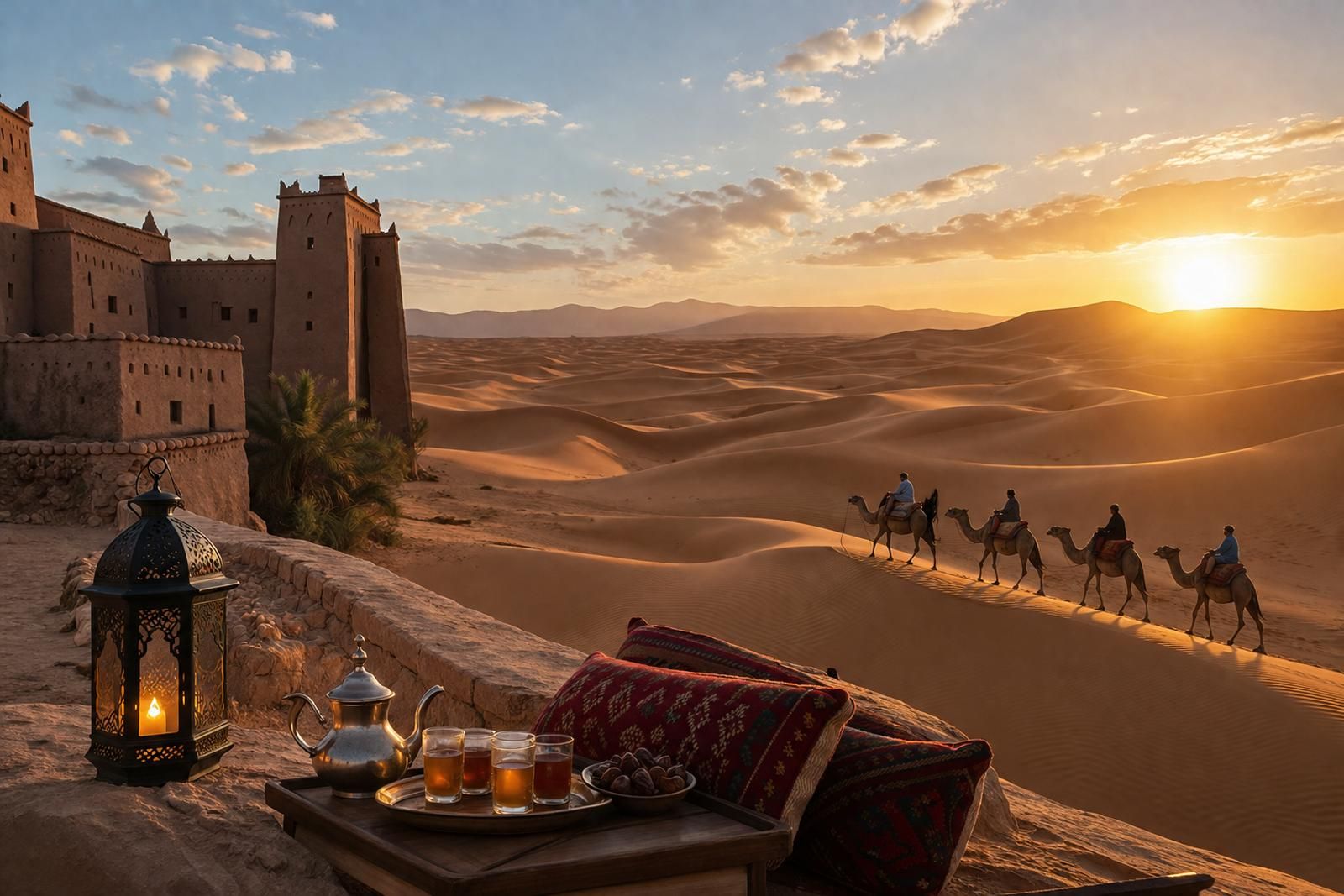
Marrakech
3 Days From Marrakech to Merzouga Desert
Cross the Atlas, sleep in a Sahara camp at Erg Chebbi, ride camels at sunrise.
Price on request Tell us your dates and party size for a quote
Marrakech
5 Days Marrakech to Merzouga Grand Desert Tour
Two nights in the dunes, the Draa palm groves, and the whole southern loop without rushing any of it.
Price on request Tell us your dates and party size for a quote
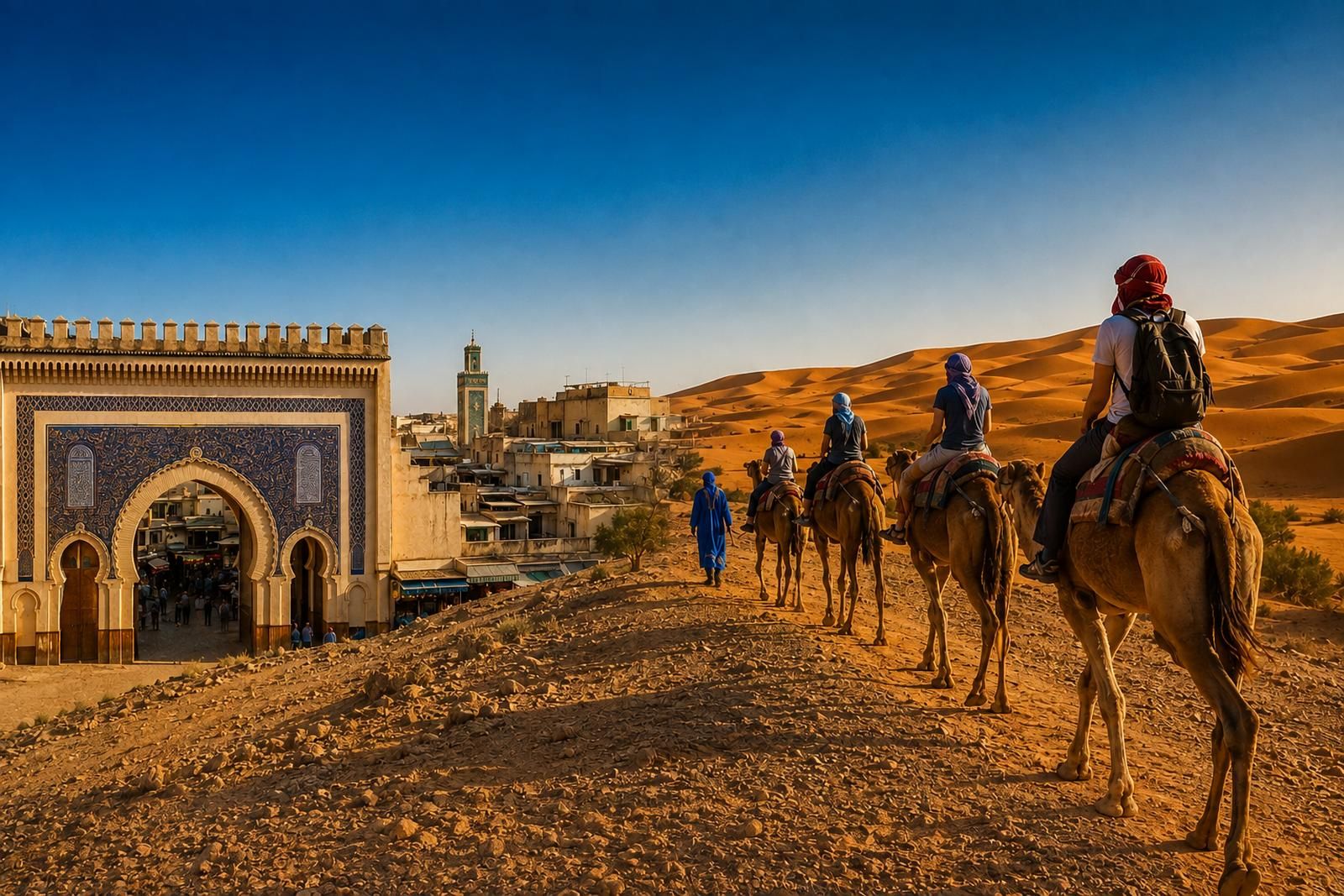
Fes
3 Days From Fes to Merzouga Desert
From Fes across the Middle Atlas and cedar forests to the dunes of Merzouga, and back.
Price on request Tell us your dates and party size for a quote
Questions this did not answer?
Send them over. We reply to everything, and we are not going to push you toward the expensive option.